Amir sent us this solution:
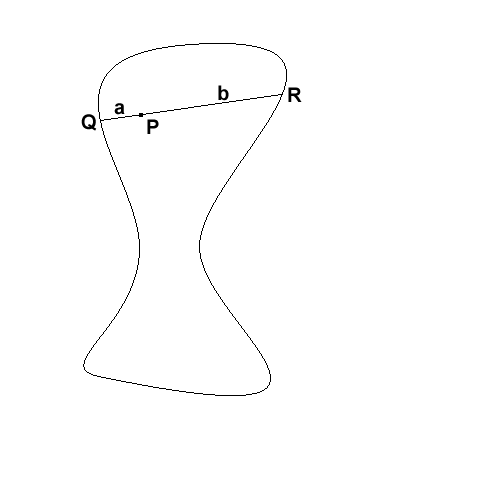
Draw any chord passing through
, and call its endpoints
and
. Let
be the length of the line segment
, and
the length of
.
If
, then clearly
is the midpoint of a chord, so we're done. So
suppose that
. We may as well assume that
(otherwise just
switch round
and
). Imagine that the shape is made out of a metal
frame, and that the chord
is made from elastic, just looped round the
frame at
and at
, but fixed at
(so that it can rotate). Rotate the
chord around
, and the elastic will stretch so that the line is always a
chord of the shape. When it's gone 180
round,
will have length
, and
will have length
, in other words, the segments will have
switched. So now
, when they started the other way round. But as
we turn the chord, the lengths of the segments change continuously, so to
switch from
being shorter to
being longer, we must have had
at some point. But then
will be the midpoint of this chord.