You may wish to try the related problem
Building Gnomons first.
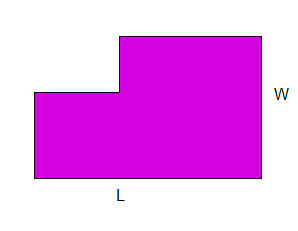
A Gnomon is a rectangle with another rectangle cut out of one
corner. The area of each Gnomon is a Fibonacci number. (The
Fibonacci numbers are $1, 1, 2, 3, 5, 8$ and so on, with each
new term being the sum of the previous two terms.)
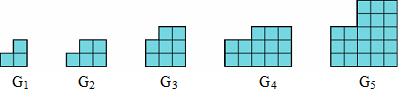
$G_1$ has area $3$, $G_2$ has area $5$, $G_3$ has area $8$ and
so on.
Draw the next three gnomons in the sequence.
Look at the length and width of the large rectangle from
which each gnomon is made.
Is there a pattern to the lengths and widths?
Can you generalise?
Now look at the length and width of the rectangle cut out of
each gnomon. Can you see any patterns here? Can you
generalise and justify what you see?
I want to group the gnomons with area 3, 8 and 21 together,
and the gnomons with area 5, 13 and 34 together. Can you
explain why I want to divide these into two separate groups?
Can you give a convincing argument why all the gnomons fit
into one of these two groups?
The interactivity below may help you to think about this
problem.
This text is usually replaced by the Flash movie.
What other interesting patterns and relationships can you
find? Send us your ideas and justifications.