The interactivity enables you to look at two copies of the same pattern and to move one in relation to the other by translating one copy of the pattern and rotating it.
In July, consideration was given to tessellations, tilings and mosaics. This over-arching theme is extended a little further this month.
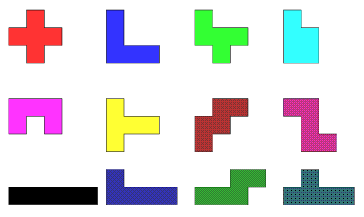
The obvious tiling properties of the pentominoes may be well known to many of you but the following may not be.
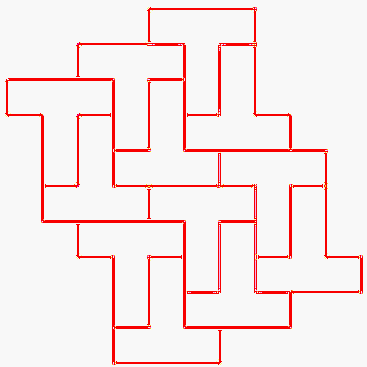
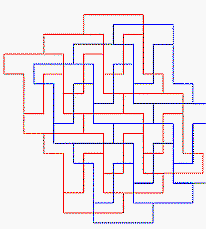
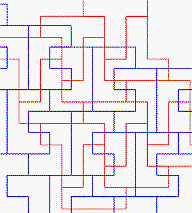
Consider the tessellation of the 'T' shaped pentomino. Using a duplicate of it, begin to 'overlay' the two tessellations to produce interesting tiling effects.
|
|
|
Find the effect that pleases you most and try to replicate it using LOGO commands in an elegant procedure.
Alternatively you may want to investigate:
other pentominoes;
other overlays;
a mixture of overlays.
Beginners can start with FIRST FORWARD 1and 2 here or go back and follow through the series month by month starting from the Introduction to LOGO in July 1999.
Circles
It was Jane's insistence that we walk the semi-circle on the netball pitch.
She was dismayed that I could not see that if we went forward one, right one a lot of times we would:
a. get back to where we started
b. have walked a circle.
Jane was six years old at the time and it had been my question, about the wheels on a train that she had drawn using LOGO, that had given rise to a protracted conversation, a walk round the netball pitch and an eventual agreement about:

First you might like to convince yourself about this instruction.
Then, why not experiment with:
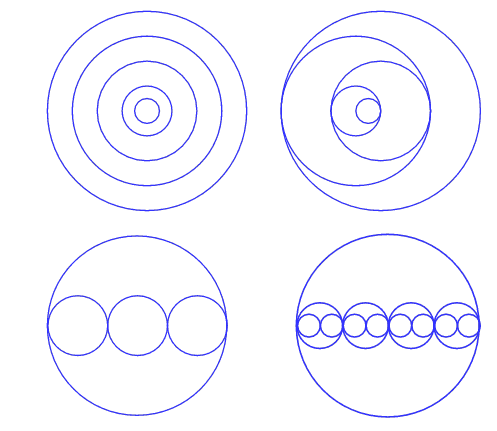
Alternatively you might like to make some patterns using circles. Or, you might like to replicate the patterns below.