We received a solution from Andisheh from Spring Field School.
His reasoning was correct but he used the wrong figures, so we are
using his response as a basis for the solution:
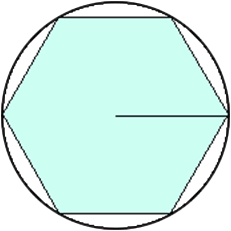
Imagine extending the radius so that you have a horizontal
diameter.
The hexagon is now split into two identical trapeziums
(trapezia?).
Area of one trapezium
|
= |
1
2
|
height x sum of parallel sides |
|
|
The area of the hexagon is therefore: |
3
2
|
× Ö3 |
|
The area of the triangle is half the area of the hexagon.
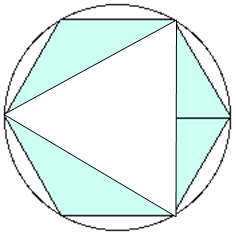
|
The area of the triangle is therefore |
3
4
|
× Ö3 |
|