Symmetry Challenge
Christina from Marborough Primary, London has given this one some
thought and made the sensible suggestion of trying to find all the
symmetrical patterns with one coloured square, then with two
squares, then three, then four. That's just what Tom has done
below.
Tom was very careful to make sure he found them all. First, he
looked for patterns with no coloured squares. Of course, there's
only one of those:
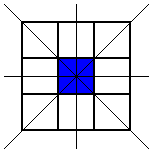
Then he looked for patterns with one
coloured square. He decided to count two patterns as the same if
they were just rotations of each other, as otherwise there would be
too many. Here are the patterns he found:
Next he looked for patterns with two coloured squares. He had
to be a bit more careful here, to make sure that he didn't miss
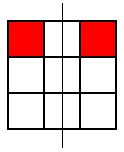
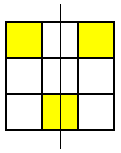
any. First of all, he coloured in the top left square. Then he
wondered whether he could find any patterns with this square
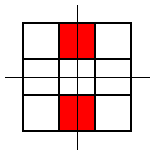
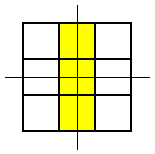
coloured where the line of symmetry was vertical. He found this
one:
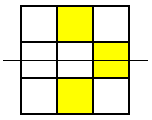
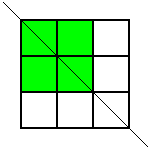
but that was the only one. Then he looked for patterns with
this square coloured where the line of symmetry was horizontal, but
he came up with the same one again (rotated, of course). Then he
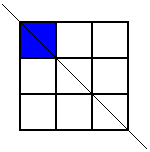
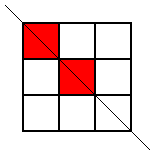
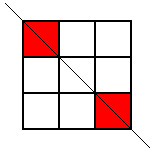
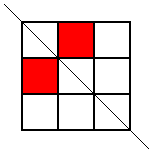
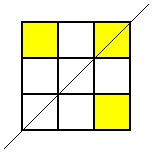
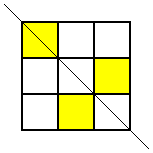
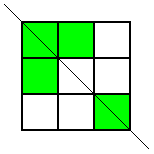
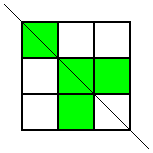
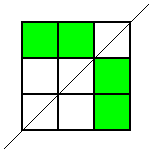
looked for ones where the line of symmetry was diagonal. Here are
the two patterns he found:
These were the only symmetrical patterns with a corner square
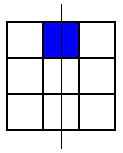
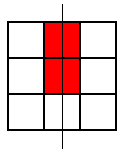
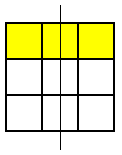
shaded. Next he shaded the top centre square and looked for
patterns with a vertical line of symmetry. Here's what he
found:
He noticed that he wouldn't get any
new patterns by looking for ones with horizontal lines of symmetry,
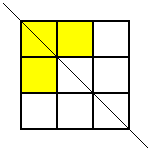
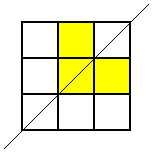
so he looked for patterns with a diagonal line of symmetry. This is
the only one he found:
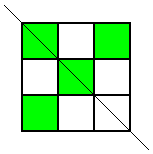
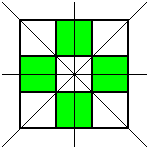
He used a similar system to find all
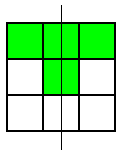
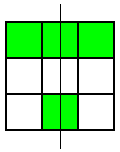
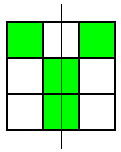
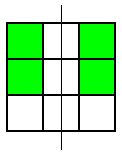
the symmetrical patterns with three or four shaded squares. Here's
what he found:
Finally, Tom noticed that really
these told him all of the symmetrical patterns, because he could
imagine a coloured grid where the white squares were the ones that
had been shaded, and these would give the patterns with five, six,
seven, eight or nine shaded squares.
So Tom found 62 symmetrical patterns
in all.
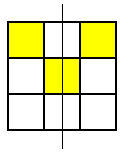
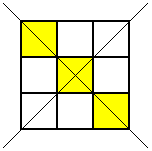
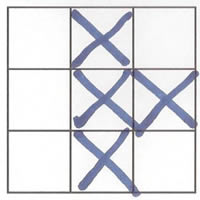
Children from Kellett School in Hong
Kong, noticed that Tom had missed out one of the patterns.
Here is the image they sent:
So that makes a total of 64 possible
solutions. Well done!