Fraction Fascination
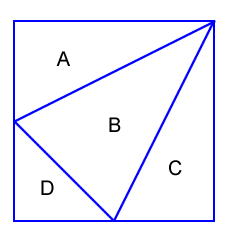
A is one quarter
C is one quarter
D is one eighth
Therefore B is three eighths
New shape made from four of above, rotated by 90.
Central shape is a rhombus.
Square above now is quarter of overall shape. C is therefore a quarter of a quarter of the total shape which is a sixteenth, but there are four of them. Therefore rhombus is a quarter of area of whole large square.
These are the original Teachers' notes
This problem requires children to split up the square into smaller pieces in such a way as to help them work out the fraction of space occupied by each triangle. Some pupils might be able to visualise these fractions, others will find it helpful to draw sketches, or annotate the picture in the problem.
It would be a good idea simply to talk through the problem with your pupils, just enough to be sure they understand the task, and then to leave them some time to think about how they will tackle it. Ask everyone to think on their own for a few minutes, but then give them the opportunity to talk to a partner about how they might approach the solution. Then, invite the class to share their ideas
together. (Think, pair, share.) Once some suggestions have been made, children can work on the solution in pairs.
Although this problem at first appears very challenging at this level, it quickly becomes more manageable. The less input you as a teacher have at the beginning of the session in terms of directly steering pupils' ideas, the more satisfaction they will feel at having solved it. (As long as you are there to support them along the way!)
You can open out this activity by extending thoughts and ideas.
The original triangle could be looked at and ideas for changing it explored.
So you may come up with ideas like these two new ones;
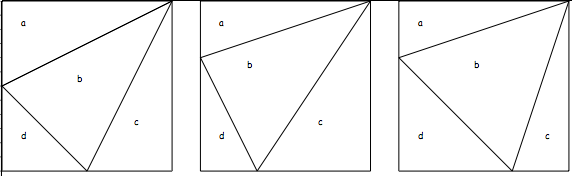
These came about by making the corners of the triangles a third of the way along rather than half as in the first, original one. You could usefully ask the pupils what they notice about the four areas in each of these three examples.
Triangles can be formed in different ways of course so opening the door to ideas such as:
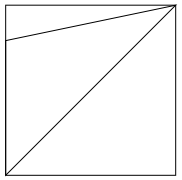
Now we have only 3 areas to explore, but what can the pupils say about them? [The point on the left hand side is 1/4 of the way down.]
They could explore many more examples like this and compare the three areas and triangles you create.
Then there is the second part of the question. Asking pupils if they could do something else with the original shape to produce a tiling effect can lead to all kinds of ideas. One that I saw was;
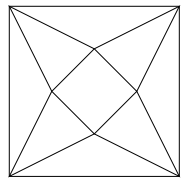
Again questions about areas can be explored.
Alternately you could right away present the same idea using the common A4 size of paper.
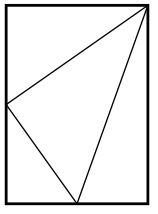
So it's really a matter of changing the original question slightly and getting the pupils to say what they see and what ideas could be explored.