Fast solutions:
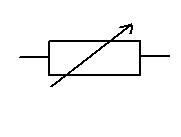
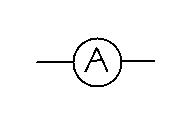
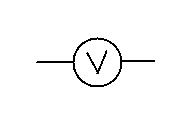
Variable resistor Ammeter Voltmeter
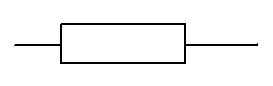
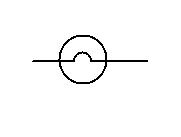
Battery Resistor Bulb
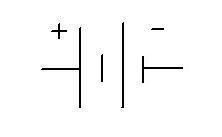
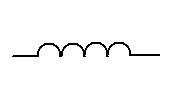
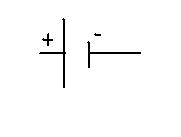
Inductor Cell Capacitor
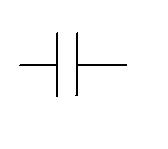
1/3 A
1V
2V
2/3 W
1W
Detailed solutions:
the total resistance of the circuit is
$3\Omega + 6\Omega = 9\Omega$ because this is a series circuit and therefore resistances add up
V=IR so 3 = I x 9 so I = 3/9 = 1/3 A
The voltage across the resistor:V=IR so V=1/3 x 3 = 1V because the current is the same through the bulb and the resistor
the voltage through the bulb is:
V=IR so V=1/3 x 6 = 2V or because the total voltage across the whole circuit is 3V and the resistor is taking up 1V, we know that the bulb is taking 3V - 1V = 2V.
The power used by the bulb:
Power=IV so P=1/3 x 2 = 2/3 Watts
The total power supplied by the cell:
P = IV so P = 1/3 x 3 = 1 Watt
This means that the resistor must be dissipating 1 - 2/3 = 1/3 Watts